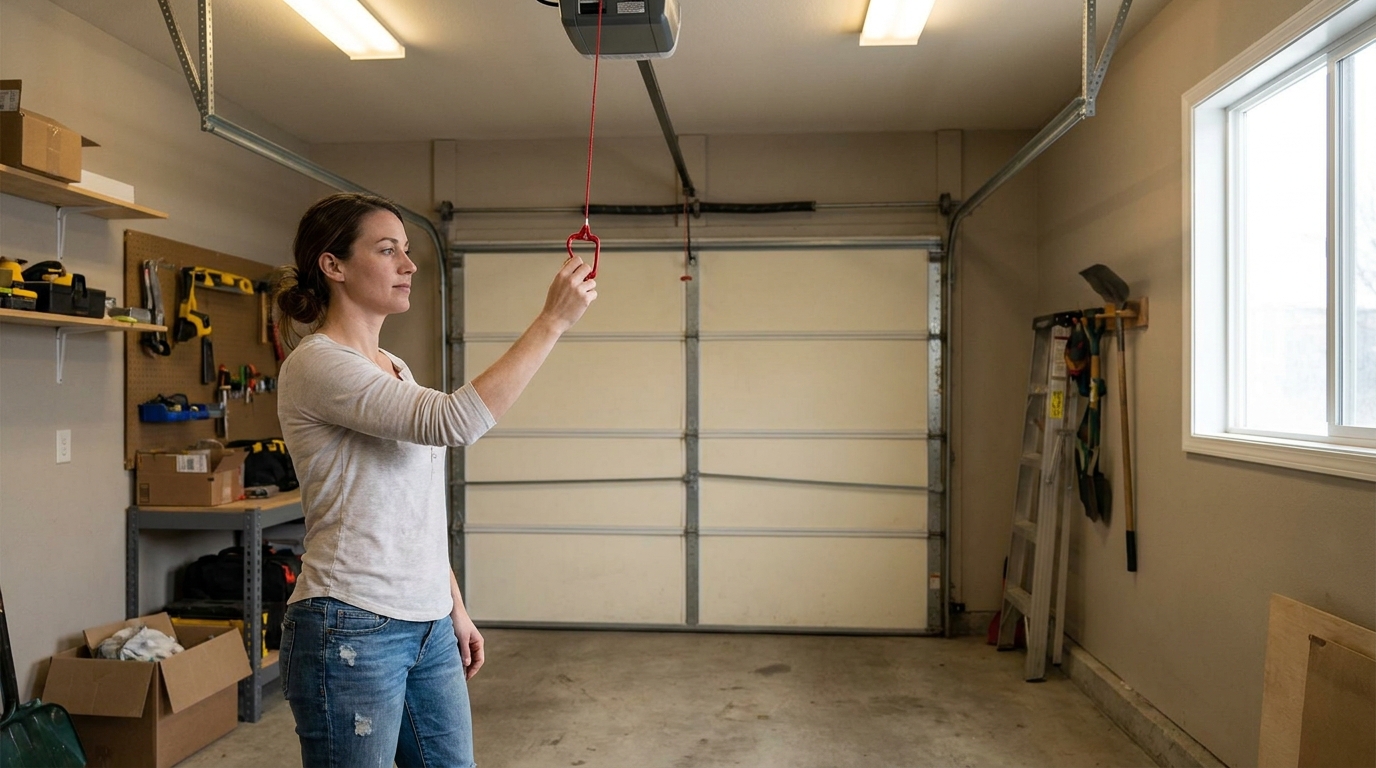
How to Open a Garage Door Manually (Step-by-Step Safety Guide)
Your garage door opener fails. The power is out. Or perhaps you are locked out of the remote signal range. Whatever the reason, knowing how to operate your garage door manually is a basic safety skill every homeowner should have before they need it.
Before You Begin: Check for a Broken Spring
This is the most important safety check. If your garage door spring is broken, manually opening the door is dangerous and potentially injurious. A garage door with a broken spring can weigh 200–400 pounds with no counterbalance. Lifting it manually risks severe strain or the door dropping suddenly.
Signs of a broken spring:
- You heard a loud bang from the garage (common sound when springs snap)
- The door is visibly crooked or one side is lower than the other
- There is a visible gap in the torsion spring above the door opening
- Cables are hanging loose on one or both sides
If you suspect a broken spring, do not attempt to open the door manually. Call for professional service instead. See our guide: How to Open a Garage Door With a Broken Spring.
What You Need
- No special tools required
- The red emergency release cord hanging from your opener trolley
Step-by-Step: How to Open Your Garage Door Manually
Step 1: Locate the Emergency Release Cord
Look up at the center track running toward the back of your garage. The opener trolley (the carriage that slides along this track) has a red cord hanging from it — usually with a red handle. This is the emergency release.
Step 2: Pull the Emergency Release Cord
Pull the cord firmly downward and toward the back of the garage. You should feel a click or pop as the trolley disconnects from the door carriage. The door is now in manual mode.
Step 3: Lift the Door Manually
With the trolley disconnected, lift the door from the bottom center using both hands. A properly balanced door (with intact springs) should lift smoothly with moderate effort — typically 10–20 pounds of force.
If the door feels very heavy, is extremely difficult to lift, or rises unevenly, stop. One or both springs may be broken or the door may be otherwise damaged.
Step 4: Keep the Door Open While You Pass Through
Unlike a powered opener, a manually operated door will not stay open automatically. If your springs are intact, the door should stay open on its own (springs hold it up). If it starts to drop, support it or do not go under it until you have someone holding it.
Step 5: Close the Door
To close, pull the door back down by the handles or bottom panel. Make sure it seats fully in the closed position and, if you have a manual lock, engage it for security.
How to Re-Engage the Opener After Manual Operation
Once power is restored or the opener issue is fixed:
- Pull the door to the fully closed position
- Press the wall button or remote to run the opener
- The opener trolley will re-engage automatically as it reaches the carriage (you will hear it click)
- On some opener models, you may need to pull the red cord again in the opposite direction to re-engage — check your opener’s manual if auto re-engage does not happen
When Manual Operation Is Not Enough
If you cannot open the door even with the release cord pulled, or if the door is very heavy or uneven, call for service. Common causes of difficult manual operation include:
- Broken spring (see above)
- Bent track or panel damage
- Cable off the drum
- Door is frozen to the floor seal (in rare Texas winter events)
Mockingbird Garage Doors provides 24/7 emergency garage door repair across Houston and Austin. Call (713) 555-0192 for immediate assistance.